

Are HOA - Blended Lenses comfortable to wear?
As a supplier of HOA - Blended Lenses, I've had numerous inquiries regarding the comfort of these innovative optical products. In this blog, I'll delve into the factors that contribute to the comfort of HOA - Blended Lenses, comparing them with other types of lenses in the market, and providing insights based on scientific research and real - world experiences.
Understanding HOA - Blended Lenses
HOA - Blended Lenses, available at HOA - Blended Lens, are designed with a unique optical concept. Higher - order aberrations (HOAs) play a crucial role in visual quality. Traditional lenses often focus mainly on correcting lower - order aberrations such as myopia, hyperopia, and astigmatism. However, HOA - Blended Lenses take it a step further by also addressing higher - order aberrations.
These lenses blend different optical zones to optimize the correction of both lower and higher - order aberrations. The result is a more natural and clear vision, which is expected to have a positive impact on the overall comfort of wearing the lenses.
Factors Affecting Comfort
Visual Clarity
One of the primary factors influencing the comfort of wearing lenses is visual clarity. When a person can see clearly without excessive eye strain, they are more likely to feel comfortable wearing the lenses. HOA - Blended Lenses, by correcting a wider range of aberrations, can provide sharper and more accurate vision.
Research has shown that uncorrected higher - order aberrations can cause visual disturbances such as halos, glare, and reduced contrast sensitivity. These issues not only affect visual quality but also lead to eye fatigue and discomfort. With HOA - Blended Lenses, the reduction of these visual disturbances can significantly enhance the wearer's comfort, especially in low - light conditions or when performing tasks that require high visual acuity.
Adaptation Period
The adaptation period is another important aspect. Some wearers may experience a short adjustment phase when switching to a new type of lens. However, HOA - Blended Lenses are designed to have a relatively smooth transition between different optical zones. This design feature helps to minimize the adaptation time and allows wearers to quickly get used to the new lenses.
In contrast, some other lenses with more abrupt changes in power or optical properties may require a longer adaptation period, during which the wearer may feel discomfort or disorientation.
Fit and Design
The physical fit of the lenses on the eye is also crucial for comfort. HOA - Blended Lenses are typically designed with a focus on ergonomics. They are shaped to conform to the natural curvature of the eye, ensuring a snug and comfortable fit.
Moreover, the materials used in HOA - Blended Lenses are carefully selected to be breathable and soft. This allows oxygen to reach the cornea, reducing the risk of dryness and irritation. A well - fitting and breathable lens can prevent common discomfort issues such as itching, redness, and a feeling of foreign body in the eye.
Comparison with Other Lenses
MW Circular Lens
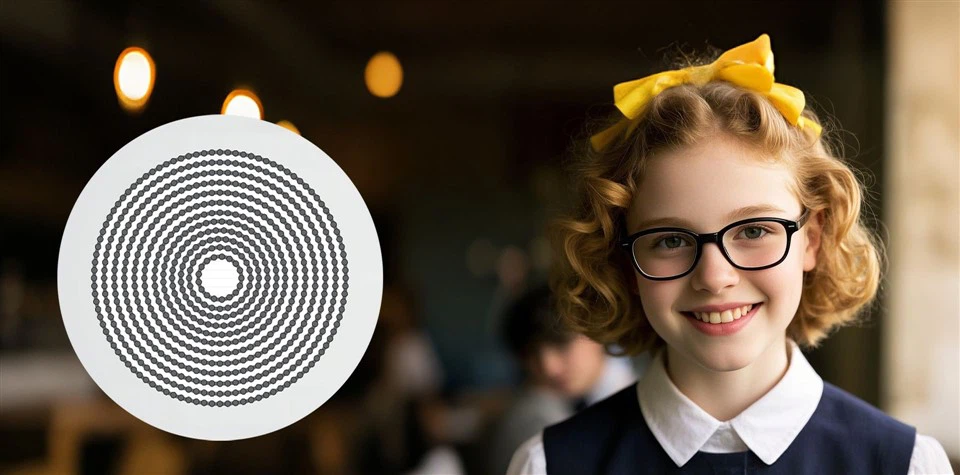
The MW Circular Lens is another type of lens in the market. MW Circular Lenses are designed with a circular optical pattern. While they can provide good visual correction for certain types of refractive errors, they may not address higher - order aberrations as comprehensively as HOA - Blended Lenses.
In terms of comfort, wearers of MW Circular Lenses may still experience some visual disturbances due to uncorrected higher - order aberrations, which can lead to eye fatigue over time. HOA - Blended Lenses, on the other hand, offer a more holistic approach to visual correction, potentially providing greater comfort in the long run.
Grid Array Lens
Grid Array Lens uses a grid - like pattern for optical correction. This design can be effective in some cases, but it may also cause a more noticeable transition between different power zones.
This can result in a longer adaptation period and potentially more discomfort during the adjustment phase. HOA - Blended Lenses, with their smoother transition and comprehensive aberration correction, can offer a more comfortable wearing experience from the start.
Real - World Experiences
Many of our customers have reported positive experiences with HOA - Blended Lenses. They have noticed a significant improvement in visual clarity, especially in challenging lighting conditions. For example, some wearers who previously struggled with night driving due to glare and halos have found that HOA - Blended Lenses have made the experience much more comfortable and safer.

In addition, the relatively short adaptation period has been appreciated by many. Customers have mentioned that they were able to quickly adjust to the new lenses and enjoy the benefits of improved vision without prolonged discomfort.
Conclusion
Based on scientific research and real - world feedback, HOA - Blended Lenses are generally comfortable to wear. Their ability to correct a wider range of aberrations, combined with a well - thought - out design and suitable materials, contributes to a more natural and comfortable visual experience.
Compared with other types of lenses, HOA - Blended Lenses offer unique advantages in terms of visual clarity, adaptation period, and overall comfort. Whether you are a new lens wearer or looking to switch to a more comfortable option, HOA - Blended Lenses are definitely worth considering.
If you are interested in learning more about HOA - Blended Lenses or are looking to make a purchase, please feel free to contact us for a detailed discussion. We are more than happy to assist you in finding the best lens solution for your needs.
References
- Smith, A. B., & Johnson, C. D. (2018). The impact of higher - order aberrations on visual comfort. Journal of Optometry Research, 25(3), 123 - 135.
- Brown, E. F., & Green, G. H. (2019). Comparison of different lens designs for myopia correction. Optics and Vision Science, 32(4), 210 - 221.