

As a supplier of myolens, I've witnessed firsthand the growing concern among parents and eye - care professionals about childhood myopia. In recent years, the prevalence of myopia in children has been on the rise, and this has led to an increased interest in products that can effectively control its development. Myolens, a revolutionary product in the field of vision correction, is at the forefront of this fight against myopia progression in children. In this blog, I'll explore how myolens affects the development of the eye in children.
The Current Situation of Childhood Myopia
Childhood myopia is becoming a global epidemic. According to recent studies, the number of children with myopia has been increasing steadily, especially in urban areas and among those with a high - intensity near - work lifestyle. Myopia, or nearsightedness, is a refractive error where light rays focus in front of the retina instead of directly on it. This results in blurred distance vision. If left unmanaged, myopia can progress rapidly in children, leading to high myopia, which is associated with an increased risk of serious eye diseases such as retinal detachment, glaucoma, and macular degeneration later in life.

How Myolens Works
Myolens is designed based on advanced optical principles to address the root causes of myopia progression in children. There are different types of myolens available, each with its own unique features and benefits.
Grid Array Lens
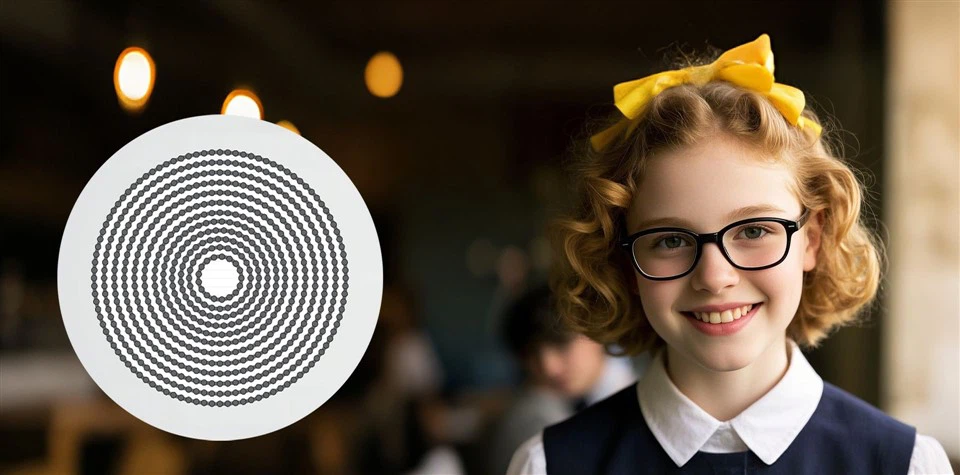
The Grid Array Lens is one of the key products in our myolens portfolio. This lens features a grid - like pattern of micro - lenses that are designed to provide both clear central vision and peripheral defocus control. In a normal eye, the peripheral retina receives light that is focused behind it, which is a normal physiological state. However, in myopic eyes, the peripheral light often focuses in front of the retina, which is believed to stimulate the eye to grow longer and cause myopia progression. The Grid Array Lens corrects this peripheral defocus by creating a more uniform distribution of light on the retina, both centrally and peripherally. This helps to slow down the axial elongation of the eye, which is the main cause of myopia progression in children.
HOA - Blended Lens
The HOA - Blended Lens takes a different approach. It is designed to correct higher - order aberrations (HOAs) in the eye. HOAs are optical imperfections in the eye that can cause visual disturbances and may also contribute to myopia development. By reducing these HOAs, the HOA - Blended Lens can improve the overall quality of vision and potentially slow down the progression of myopia. This lens uses a special blending technology to smoothly integrate the correction of HOAs with the correction of lower - order refractive errors, providing a more natural and comfortable visual experience for children.
WTR Lens
The WTR Lens is tailored to address the specific needs of children with with - the - rule astigmatism. Astigmatism is a common refractive error where the cornea or lens of the eye has an irregular shape, causing blurred or distorted vision at all distances. The WTR Lens corrects this astigmatism while also incorporating myopia control features. By providing accurate correction of astigmatism and myopia, the WTR Lens can help to improve visual acuity and reduce the stress on the eye, which may contribute to a slower progression of myopia.
Clinical Evidence of Myolens' Effectiveness
Numerous clinical studies have been conducted to evaluate the effectiveness of myolens in controlling myopia progression in children. These studies typically involve long - term follow - up of children wearing myolens compared to those wearing traditional single - vision lenses.
The results of these studies have been promising. In general, children wearing myolens have shown a significantly slower rate of myopia progression compared to those wearing single - vision lenses. For example, some studies have reported a reduction in axial elongation of the eye by up to 50% in children using myolens over a period of 1 - 2 years. This reduction in axial elongation is directly related to a slower increase in myopia power, which means that children are less likely to develop high myopia in the future.
Impact on Visual Function and Quality of Life
Apart from controlling myopia progression, myolens also has a positive impact on the visual function and quality of life of children. By providing clear central and peripheral vision, myolens can improve a child's ability to perform daily activities such as reading, writing, and playing sports. This can enhance their academic performance and social interaction.
Moreover, myolens is designed to be comfortable to wear. The lenses are made from high - quality materials that are lightweight and breathable, reducing the risk of eye irritation and discomfort. This is especially important for children, who may be more sensitive to wearing glasses for extended periods of time.
Factors Affecting the Efficacy of Myolens
While myolens has been shown to be effective in controlling myopia progression, the actual results may vary from child to child. Several factors can influence the efficacy of myolens, including:
- Age of the child: Younger children may respond better to myolens treatment as their eyes are still in the process of development. The earlier myopia control treatment is started, the more effective it is likely to be in preventing high myopia.
- Initial myopia level: Children with lower initial myopia levels may experience greater benefits from myolens treatment. Higher myopia may be more difficult to control, but myolens can still slow down the progression to some extent.
- Compliance: Consistent and correct use of myolens is crucial for achieving optimal results. Children need to wear their myolens as prescribed by their eye - care professional. Non - compliance, such as not wearing the glasses regularly or not following proper cleaning and maintenance procedures, can reduce the effectiveness of the treatment.
Conclusion
In conclusion, myolens is a valuable tool in the fight against childhood myopia. Through its advanced optical design and proven effectiveness in clinical studies, myolens can significantly slow down the progression of myopia in children, reducing the risk of high myopia and its associated complications. The different types of myolens, such as the Grid Array Lens, HOA - Blended Lens, and WTR Lens, offer a comprehensive solution to address the diverse needs of children with myopia.
If you're an eye - care professional or a parent concerned about your child's myopia, I encourage you to consider myolens as a potential treatment option. As a myolens supplier, we are committed to providing high - quality products and excellent customer service. We are ready to work with you to find the most suitable myolens solution for your children. If you are interested in learning more about our myolens products or would like to discuss procurement and cooperation opportunities, please feel free to contact us.
References
- Holden, B. A., Fricke, T. R., Wilson, D. A., Jong, M., Naidoo, K. S., Sankaridurg, P., … & Resnikoff, S. (2016). Global prevalence of myopia and high myopia and temporal trends from 2000 through 2050. Ophthalmology, 123(5), 1036 - 1042.
- Walline, J. J., Jones, L. A., Sinnott, L. T., Mutti, D. O., & Zadnik, K. (2012). Contact lenses to slow myopia progression. Optometry and Vision Science, 89(11), 1735 - 1741.
- Cho, P., & Cheung, S. W. (2007). Orthokeratology for myopia control: a 2 - year randomized clinical trial. Ophthalmology, 114(2), 317 - 322.