

Hey there! As a supplier of HOA - Blended Lenses, I'm super excited to take you behind the scenes and share how these amazing lenses are designed.
First off, let's understand what HOA - Blended Lenses are. HOA-Blended Lens are a revolutionary type of lens used in various optical applications, especially in the field of vision correction. They combine different optical properties to provide a more natural and comfortable visual experience for the wearer.
The design process of HOA - Blended Lenses starts with a deep understanding of the human eye. Our team of experts, including optometrists and optical engineers, study how the eye works, how it focuses on objects at different distances, and how it responds to various visual stimuli. This knowledge forms the foundation of the lens design.
One of the key aspects of designing HOA - Blended Lenses is dealing with higher - order aberrations (HOA). These are optical imperfections in the eye that can cause blurry vision, glare, and other visual disturbances. Unlike traditional lenses that mainly correct for lower - order aberrations like nearsightedness, farsightedness, and astigmatism, HOA - Blended Lenses are specifically engineered to address these higher - order issues.
To start the actual design, we use advanced computer - aided design (CAD) software. This software allows us to create a virtual model of the lens. We input all the relevant data about the eye, such as the curvature of the cornea, the refractive index of the eye's media, and the specific HOA values of the patient. Based on this data, the software generates a complex mathematical model of the lens surface.

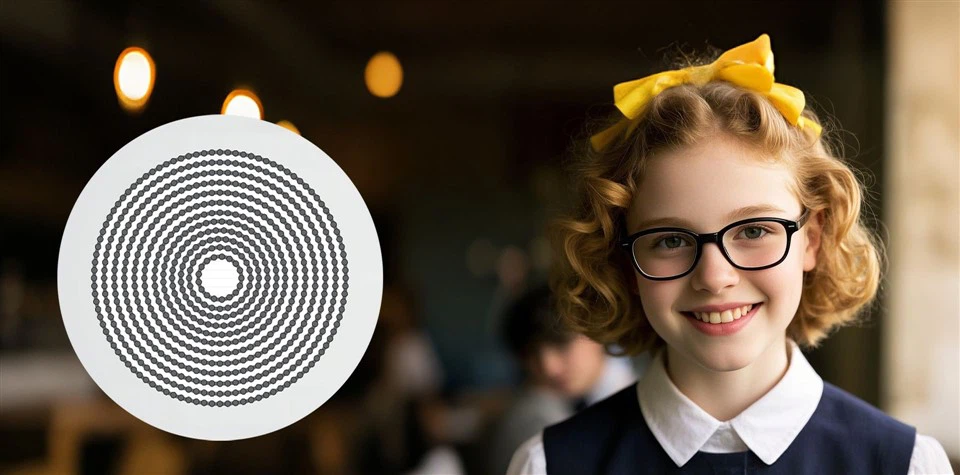
The design of the lens surface is crucial. It needs to be carefully shaped to correct the HOA while also providing a smooth transition between different focal powers. This is where the "blended" part of the HOA - Blended Lenses comes in. Instead of having a sharp boundary between different zones of the lens, the transition is gradual, which helps to reduce visual discomfort and provide a more seamless visual experience.
Another important factor in the design is the material of the lens. We use high - quality optical materials that have excellent optical properties, such as high clarity, low dispersion, and good resistance to scratches and UV radiation. The choice of material also affects the weight and thickness of the lens, which are important considerations for the comfort of the wearer.
Once the initial design is complete, we create a prototype of the lens. This prototype is then tested in a laboratory environment. We use specialized equipment to measure the optical performance of the lens, such as its ability to correct HOA, its focal length, and its visual acuity. We also conduct subjective tests with human subjects to get feedback on the comfort and visual experience of wearing the lens.
Based on the test results, we make adjustments to the design. This iterative process continues until we achieve the optimal performance. We might tweak the curvature of the lens surface, change the material properties, or adjust the blending parameters to improve the lens's performance.
Now, let's talk about some of the related lens technologies. Grid Array Plus Lens are another type of advanced lens that uses a grid - like pattern to provide multiple focal points. This can be useful for people with presbyopia or those who need different focal lengths for different tasks. The design of Grid Array Plus Lenses also involves careful consideration of the optical properties and the needs of the wearer.
Diffusion - Blended Lens are yet another innovation in the field of optical lenses. These lenses use diffusion technology to reduce glare and improve contrast. The design of Diffusion - Blended Lenses focuses on creating a controlled diffusion pattern that can enhance the visual experience in different lighting conditions.
In conclusion, the design of HOA - Blended Lenses is a complex and multi - step process that involves a combination of scientific knowledge, advanced technology, and careful testing. We are constantly working on improving our designs to provide the best possible visual solutions for our customers.
If you're interested in learning more about HOA - Blended Lenses or are considering purchasing them for your optical needs, I'd love to have a chat with you. Whether you're an optometrist looking for high - quality lenses for your patients or an individual seeking better vision, we can provide you with the information and support you need. Just reach out, and let's start a conversation about how our HOA - Blended Lenses can meet your requirements.
References
- Optics textbooks on higher - order aberrations and lens design
- Research papers on advanced optical materials for lenses
- Industry reports on the latest trends in vision correction technologies